Hail impact
An impact can damage a shingle’s surface or reinforcement. Marks vary with the material and the impact; granules in a gutter or a dented item elsewhere are clues, not a complete diagnosis of the roof.
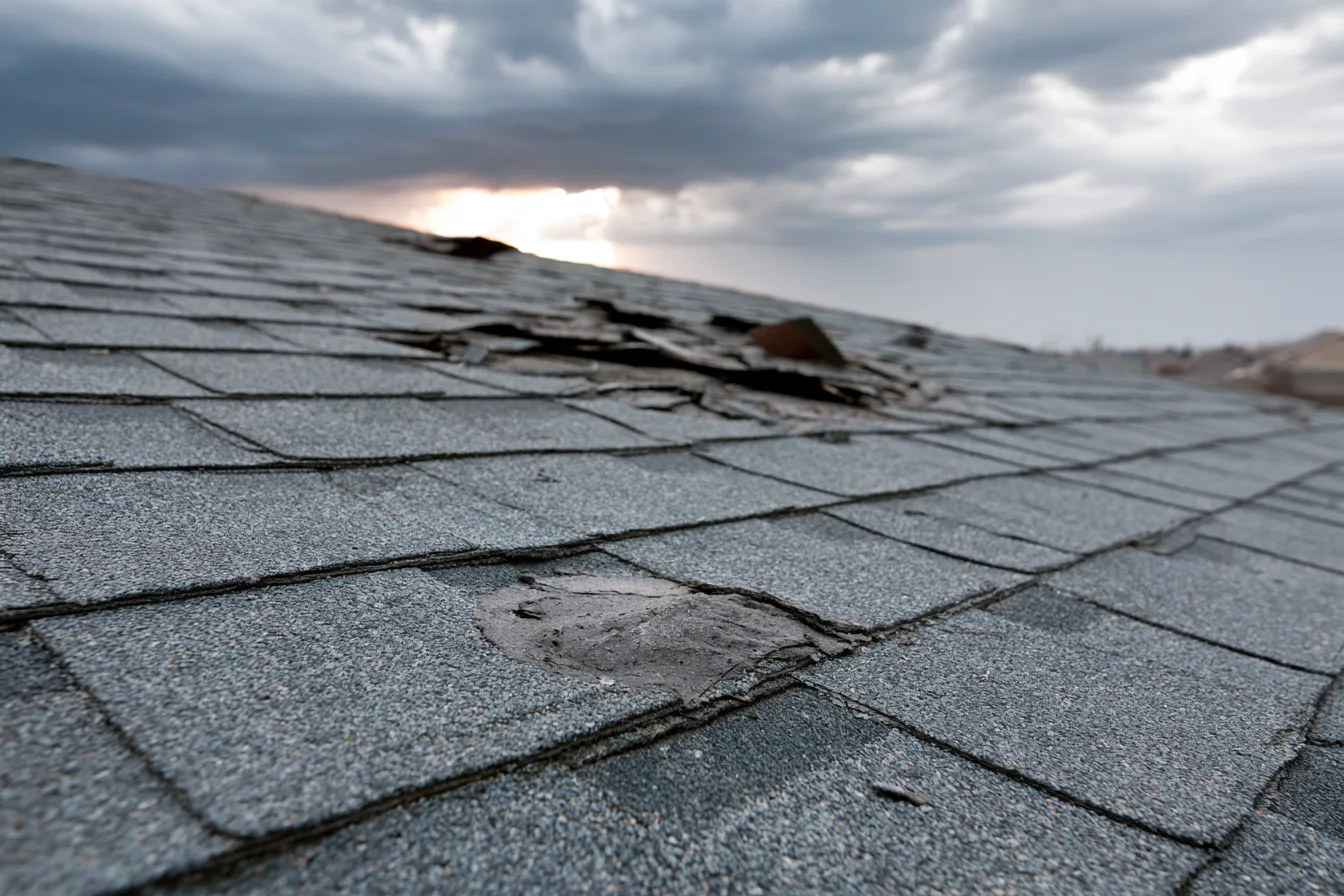
Wind and hail can affect shingles, flashing and the layers beneath them in different ways. Get your Anna roof checked after a storm and discuss the repair it actually needs.
A few loose shingles are easy to spot. A creased shingle, damaged seal or impact may be much less obvious from the yard. The useful next step is to examine the roof and distinguish what the storm changed from ordinary wear or an older repair.
We inspect the affected roof areas and their surroundings, then discuss what can be repaired and whether the damage extends into a larger scope. The roof covering, flashing, underlayment and decking each need attention if they have been affected.
If water is entering now, call and tell us that the leak is active. Stay clear of a sagging ceiling or water near electrical fixtures. Do not climb onto a wet or damaged roof to investigate.
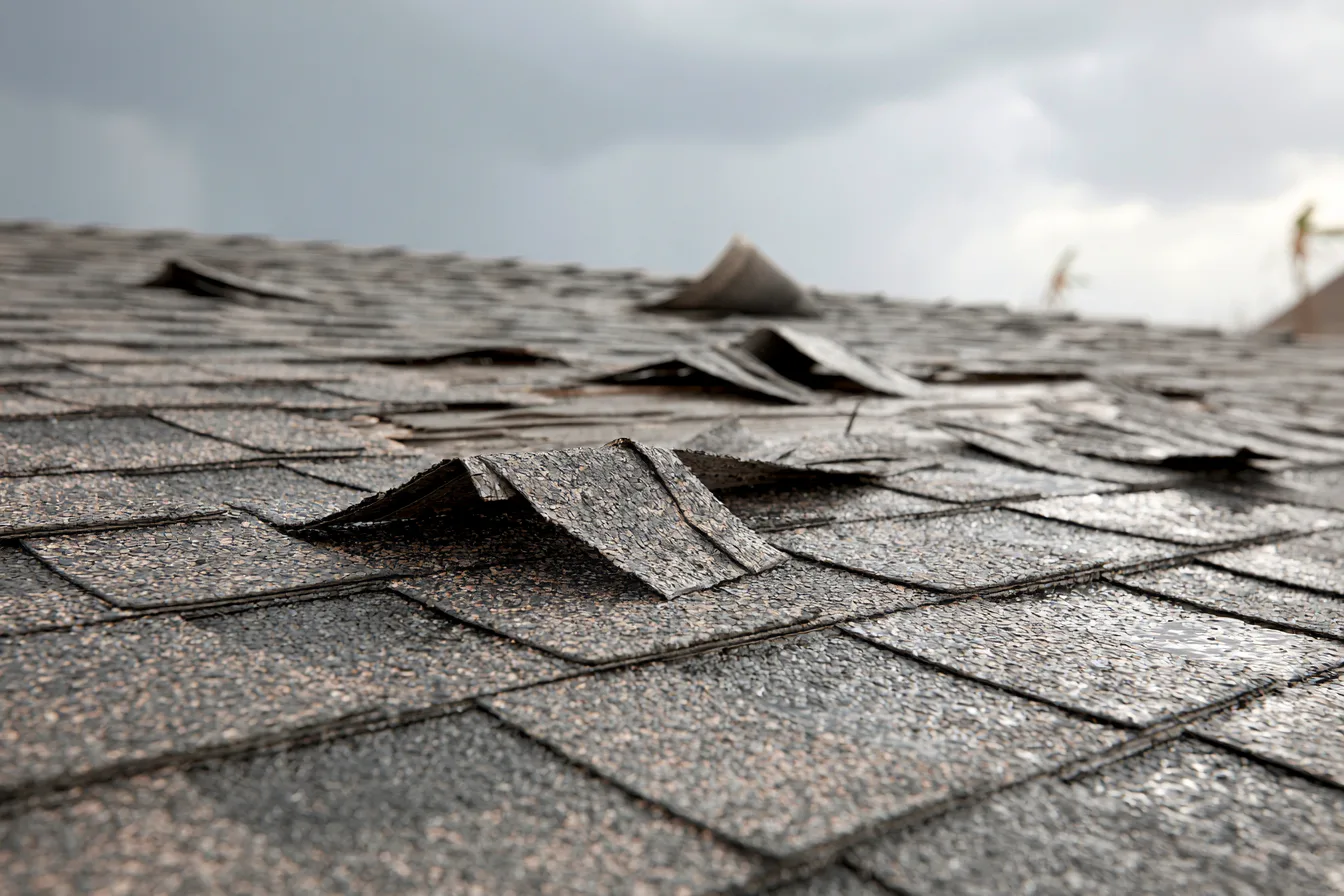
The two can occur in the same storm, but the roofing problems are different. Inspection connects the visible marks to the condition of the material.
An impact can damage a shingle’s surface or reinforcement. Marks vary with the material and the impact; granules in a gutter or a dented item elsewhere are clues, not a complete diagnosis of the roof.
Wind can lift shingles, break seals, crease tabs or remove material. A shingle may settle back down after lifting and still have a damaged connection. Adjacent shingles matter when planning a repair.
An exposed opening may need temporary protection before a full repair can be carried out. Its job is to reduce further water entry while the work is arranged; it does not restore the roof assembly or establish that damage below it is dry.
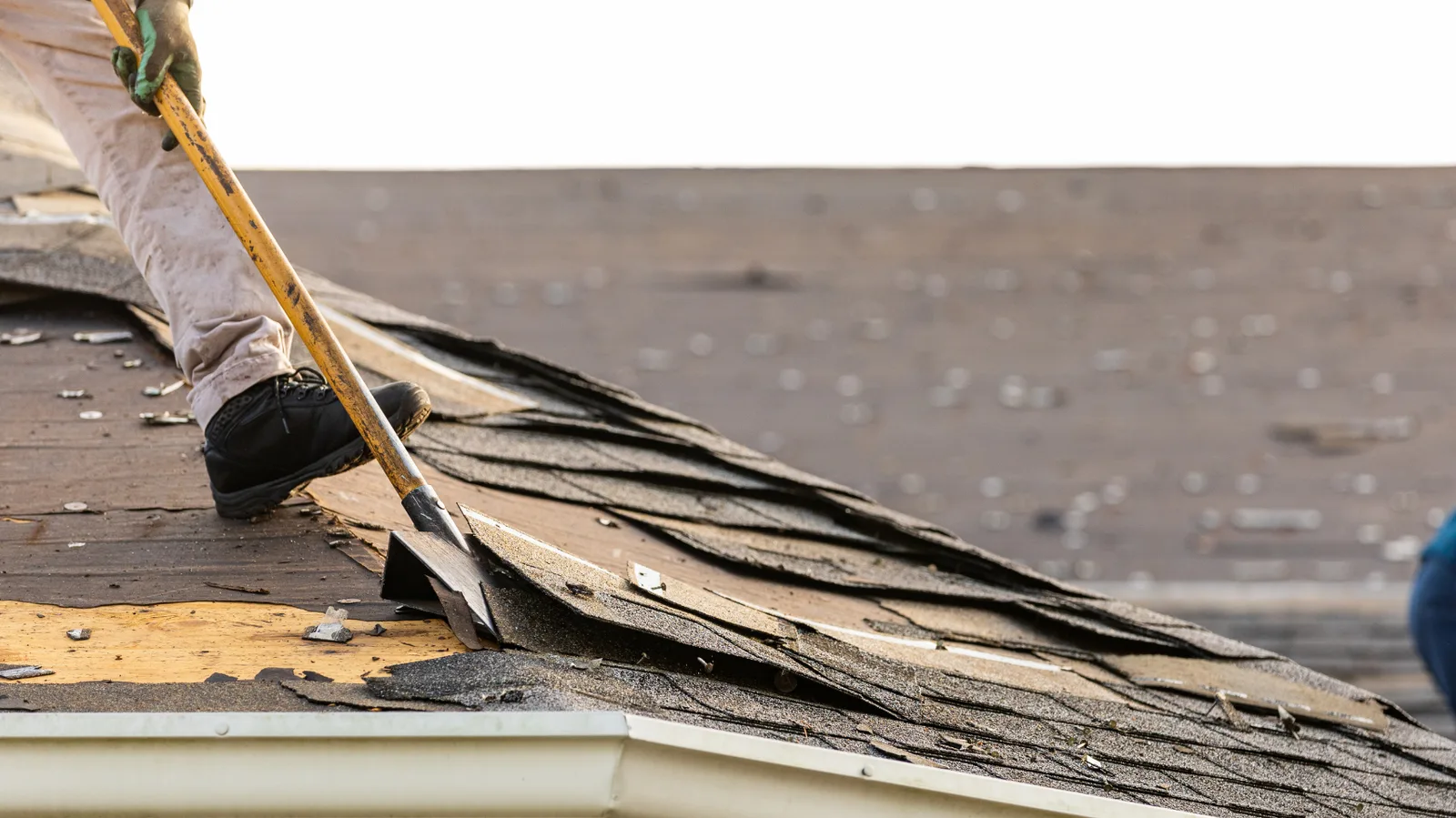
The lasting work depends on the damaged detail. Missing shingles may require replacement of the affected courses and the layers beneath. A disturbed pipe boot or wall flashing needs its water-shedding connection rebuilt. If the surrounding material is brittle or damage spreads across several slopes, a wider replacement may be the more useful discussion.
We can discuss the immediate concern and the work that follows. Access and weather affect what can be done safely, so describe active water entry when you call.
A storm inspection and an insurance claim answer different questions. We can examine the roof and explain the roofing work. The insurer decides whether the reported damage is covered and how the policy applies.
Coverage terms, deductibles and depreciation can affect what the owner pays even when damage is covered. A roof replacement is not automatically an insurance-paid project, and a product’s impact rating does not guarantee that every storm leaves it undamaged.
Keep the roofing discussion grounded in the actual roof. The insurance guide explains the main payment terms and which questions belong with the roofer or insurer.
Where the covering or a detail has failed, and how much material is affected.
Whether replacement material can connect to sound, workable roofing.
Whether water or impact has affected the layers beneath the surface.
No. The roof needs to be examined. Hail size, impact, roof material and the condition of the covering can affect the damage. The fact that hail fell does not establish the scope for your property.
No. An impact classification describes performance in a particular test. It does not make a roof immune to hail or automatically add hail coverage to a manufacturer’s standard warranty.
Sometimes. The surrounding shingles and underlying layers must be sound and workable, and the replacement must fit the system. Damage extending beyond the visible missing piece can make the necessary work larger.
Tell us what happened and whether water is entering the building now. We can discuss an inspection and the roofing work your property needs.