The roofing material
A manufacturer’s product warranty addresses the covered material under its stated terms. It is not a general promise that no leak or storm damage can ever occur. Labor and accessory coverage depend on the particular warranty.
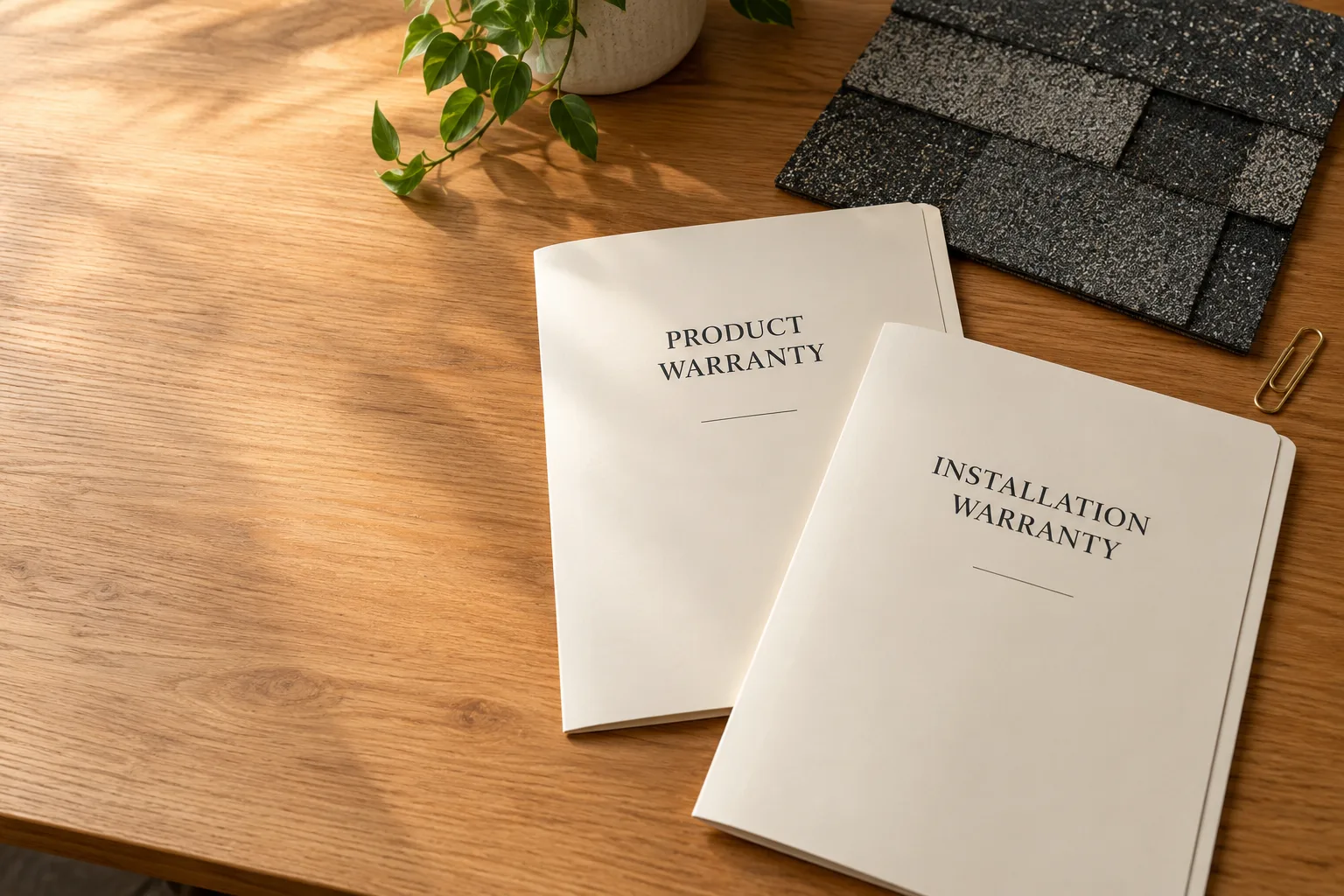
Understand roofing warranty terms before choosing a roof: product coverage, installation coverage, conditions and the records that connect them to your property.
A roof warranty is a written promise with a defined issuer, covered problem and set of conditions. The name on the brochure does not tell you everything about labor, exclusions, transfer or the roof components required for that coverage.
Start by separating the product from the installation. A material defect and a workmanship problem are different causes, and the applicable coverage may come from different parties. The actual documents supplied with the chosen project establish the terms.
A manufacturer’s product warranty addresses the covered material under its stated terms. It is not a general promise that no leak or storm damage can ever occur. Labor and accessory coverage depend on the particular warranty.
Workmanship coverage concerns the installation and has its own issuer, duration and conditions. Some manufacturer programs include installation coverage when specified requirements are met; that should not be assumed from a shingle brand alone.
For a concrete manufacturer example, Owens Corning’s warranty information provides an example of how coverage varies with the selected roof system and program requirements. Review the terms for the actual products and coverage included in your project.
The selected product, required accessories and installation method can affect the warranty that applies. Some terms change with time or ownership. A long headline period is not enough to establish what is paid after a covered problem or whether the coverage transfers.
These questions are most useful while the project is being defined. The roofing choice and its actual coverage should be explained together, with the applicable documents identified for the completed work.
Identify who provides the coverage and the kind of failure it addresses.
Check which costs are included and whether the coverage changes during its term.
Understand required components, registration or transfer steps in the relevant document.
A roofing problem still needs attention even when warranty coverage is uncertain. The inspection can identify the physical cause while the applicable documents establish whether it falls within a covered promise. A leak at a pipe and a material defect can require different roofing work and different coverage questions.
Keep the project’s product identification, installation information and warranty documents with the property records. They help connect a later concern to the installed roof and can matter when ownership changes. The exact notice, transfer or repair requirements come from the particular coverage.
Routine care remains part of owning the roof. Blocked drainage, later equipment work and damage to flashing can create problems unrelated to a material defect. A warranty is useful protection within its terms, not a replacement for looking after the whole assembly.
No. Leaks can arise from details, damage or conditions outside a material warranty. The cause and the actual coverage terms determine the relevant next step.
No. A test rating describes a tested characteristic. Coverage for hail depends on the actual warranty, and a rated product can still be damaged.
Not always. Transfer eligibility, timing and conditions vary. The warranty document for the installed roof provides the applicable rules.
Discuss the proposed material, complete installation and applicable coverage as part of your roof project, starting with a free inspection.